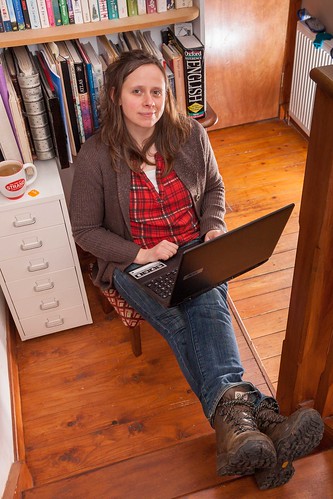
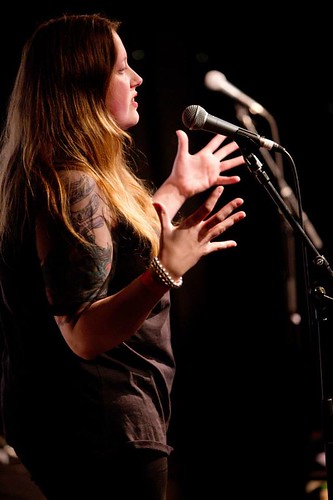
(Credit)
Hello there. Yes, it’s me. I’m still around these parts every so often, though I am shocked to see I haven’t posted in over a year.
I’m here to talk about gratitude.
Every year for eight years, I wrote a post entitled “In [year], I…”, and posted it here.
(Although I’ve archived 90% of ONS’s content — spanning 13 years! — you can still see those posts here: 2008, 2009, 2010, 2011, 2012, 2013, 2014 and 2015.)
Each one was a chronicle of my year, of the things I’d achieved, and how I felt about them.
I didn’t do one of these posts in 2016: the year I published my first ever book and did loads of other things besides. Though the year started well (the book came out in January), by the end of it I was deep in the grip of depression and anxiety. Donald Trump had been elected, the British public had voted for Brexit, and I honestly thought the world was going to end. I didn’t know it then, but my relationship (of six years) wouldn’t last the first quarter of 2017 (my own fault). By March, I’d have run out of freelance work, and would find myself needing to move out of my ex’s house, along with all my worldly possessions. Though I wasn’t consciously aware this was coming, I remember sitting by myself in my living room, in the dark, on Christmas Eve, listening to the Carols from Kings carol service on the radio and crying bitterly. I did know I wasn’t in a good way. Writing a grateful, celebratory end-of-year post was just out of the question. I didn’t do it, and then because I’d broken the chain, I didn’t do a 2017 post or a 2018 post either.
You have no idea how much I regret that now. Imagine if I’d had an unbroken run of posts spanning eleven whole years?
I regret it for another reason, though.
I realise now that I fell totally out of the habit of being grateful.
(Those of you who’ve followed this blog for a long time will remember that I also used to do weekly gratitude posts on Thursdays, of which only one hasn’t been archived now — this was an error I think, but I’ll leave it there anyway.)
For half of 2017, all of 2018, and most of 2019, I was in therapy. I was surviving — and then I was recovering from — a long spell of mental ill health and emotional upheaval. At the same time, incredible things were happening in my professional life: 2017 was a truly life changing year. Selling All The Hidden Truths set in motion a chain of events that moved so fast I could barely see straight, let alone take stock. I knew what was happening to me professionally was amazing, but I struggled to process any of it — for almost two whole years — because I was busy trying to get things back on track emotionally. People kept saying things like, “you must be SO HAPPY!”, and I’d nod and bluster along. It was great, it was great, I knew it was great — but for a really long time I couldn’t feel the greatness, because I was too busy having to feel so many other things. Gratitude was in the mix, but it wasn’t important enough to be at the forefront, because jostling for position were other, bigger things like learning to trust my new partner, learning how to set new boundaries, or learning not to catastrophise everything to the point where I assumed the world was going to end.
And, as Oprah and Brene Brown and all these other smart and worthy folk are constantly telling us: gratitude is a practice, like going to the gym and working a muscle.
If you don’t use it, you lose it.
I have not done enough gratitude practice over these past two years. I’m well enough now to see that. All the other noise has died down, and I can see for the first time what a sorry state my gratitude is in. The muscle has withered, friends. And now that’s the problem, that’s what’s contributing to the new and ever-changing mental health stuff I’m grappling with.
(Just to add: there was another reason I wasn’t openly SUPER GRATEFUL for the massive blessings that came my way in 2017 and 2018. Underneath all the noise, I was also aware of a thin seam of worry about looking braggy. I didn’t want people to think who does she think she is, the Queen of Sheba? That insecurity was fed, of course, by the fact that my mental health was on the floor. I’m back up off that floor and now realise that anyone who looks at someone else talking about their achievements — especially if that someone is a woman — and thinks “she’s just up herself” IS A JERK. A jerk who needs to go away and look at their own life to figure out what’s making them feel that insecure and inadequate. There’s enough pie to go round, and seeing someone else getting a big juicy slice ought only to serve as an illustration of that. PIE ALL ROUND.)
So here goes. Here are all the amazing, unexpected, unusual, cool and downright great things that happened to me in 2019. I am so grateful for all of them.
In 2019, I…
* started the New Year as I meant to go on: with an amazing solo writing retreat in York, where I wrote the very first words of Cover Your Tracks, my third novel.
* took on a fantastic freelance contract with the Edinburgh International Book Festival — the final major Scottish literature organisation that I hadn’t yet worked for! — as their Schools Writer in Residence for the Citizen Project.
* proof-read and sent off the FINAL FINAL FINAL draft of What You Pay For, aka the ‘difficult second novel’
* went into the final semester of my two-year contract as Writer in Residence at the University of Edinburgh. As an eighteen year old undergrad, I used to attend workshops with then-WiR Brian McCabe, and think, “one day, I want to do this job.” It still blows my mind on the reg to know that I made that happen.
* I continued on with several of the freelance teaching gigs I love dearly: leading Write Like A Grrrl! courses and Golden Hare Writers workshops at the beautiful Golden Hare Books.
* helped my lovely partner Dom to bring his established spoken word night, Listen Softly, to Edinburgh from London. Over the course of this year we’ve attracted standing-room-only crowds and booked some truly incredible performers. We also produced a beautiful and hopeful anthology, Luminous, defiant! In February 2020 we’ll celebrate one year of listening softly in Edinburgh.
* bagged a week’s writing residency at the gorgeous Moniack Mhor — it was incredible to get to go back exactly two years after my month-long stint there as the winner of the 2017 Jessie Kesson Fellowship. I spent a whole week writing poems while it snowed outside, and it was blissful.
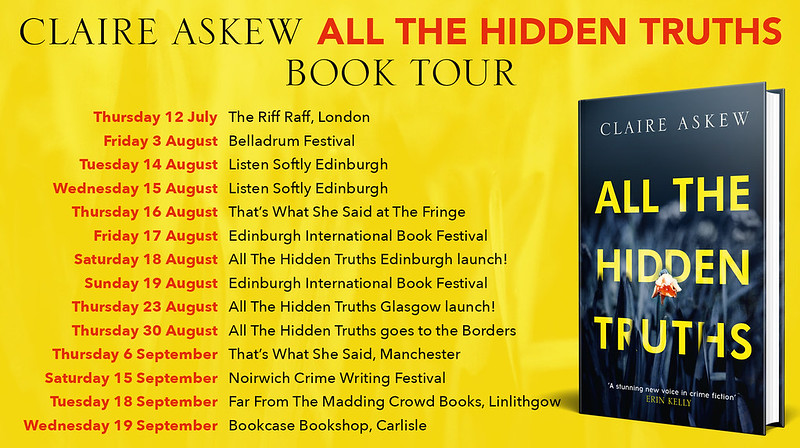
* launched the paperback edition of All The Hidden Truths. Full disclosure: April/May was HARD. Right before the paperback was due to drop (so, basically the worst possible moment) my entire publishing team just happened to find new jobs — literally, within two weeks of each other. It really was the weirdest fluke! My new editor wasn’t appointed for a further five months, and it was a scary, lonely and difficult time. I still wonder how it affected the book and how things might have been had it not happened. But the book came out, and I was grateful for all the support I received from readers. I’m especially grateful to Waterstones in Scotland, who made All The Hidden Truths their book club choice as part of the paperback release, and who booked me for events in Edinburgh, Perth, Dundee and Inverness, and even took me out for a lovely dinner with all their Glasgow booksellers! It made such a difference at a tricky time.
* finished work on my second poetry collection — thanks largely to that precious Moniack week — having had to put poetry aside for such a long time as fiction literally took over my life. I’m delighted to say that the collection was accepted for publication by Bloodaxe Books — it’s called Break & Closure, and it’ll be out in 2021.
* was a Hatchards Author of the Year (link to an incredible retro 90s Tatler article about this accolade)! And got to go to the extremely swank Authors of the Year reception where I fangirled over Anna Burns, who was wearing seriously cool shoes.
* helped run a frenetic and very fun day-long festival for ~80 teenagers at North Edinburgh Arts as part of the ongoing Citizen Project. Creating a giant collaborative poem on the floor of the main theatre was an experience I will NEVER forget.
* IAN RANKIN READ MY NOVEL AND TWEETED TO SAY IT WAS “METICULOUS AND COMPELLING” AND I MADE AN EXTREMELY HIGH-PITCHED NOISE IN PUBLIC
* I went on a bloody amazing For Books’ Sake writing retreat, led by the GREAT Jane Bradley, hit 50k words on Cover Your Tracks, and realised for the first time that I might just be able to write this god damn book. Maybe. Possibly.
* launched What You Pay For in the midst of EDINBURGH FRINGE MADNESS. People seemed to quite like it — indeed the Scotsman liked it so much that they made it one of their Books of 2019. Apple Books did too!
* SOMEHOW co-ordinated a two-day takeover of the Edinburgh International Book Festival Schools Programme by the Citizen teenagers, topped off by a spectacular showcase of all the work made by Citizen participants over the course of the project. I then stepped back from Citizen because MY LIFE IS, AS YOU SEE, VERY FULL OF THINGS, but I wrote a retrospective about my year right here. It was SO GOOD.
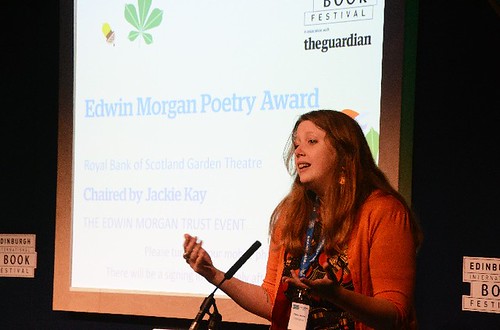
* appeared at Granite Noir, the Edinburgh International Book Festival (for the third consecutive year!), and Bloody Scotland (for the second!)…
* …and while at Bloody Scotland, I only went and won the inaugural McIlvanney Debut Crime Fiction Prize for All The Hidden Truths! Presented to me by Richard Osman!? And then I met DAVID BALDACCI?!? And walked at the front of the annual torchlight procession??!!! MY MIND IS STILL BLOWN. I am SO GRATEFUL.
* helped my lovely, supportive, long-suffering parents celebrate their 40th wedding anniversary!
* went on the holiday I’ve been dreaming about since I was ten years old and first saw the movie Hocus Pocus: Dom and I spent two weeks in Boston and Salem, Massachusetts, USA! I went in EVERY WITCHY STORE and took about five billion photos of incredible Halloween themed, pumpkin-bedecked houses — you can see the whole lot on my Instagram!
* met a brand new tiny human in the form of Dom’s cutie-butt of a nephew, baby Alfie!
* did my usual tour of Scotland’s libraries and community spaces for Book Week Scotland: six days, six events, five local authorities and 342 miles covered. Thank you so much to the organisers who booked me and the many readers who came to hear me speak in Stockbridge, Dunshalt, Granton, Bishopbriggs, Coatbridge and Kelso!
* brought ‘witch school’ back to Edinburgh with the help of Dr Alice Tarbuck, who is the Batman to my Robin. Toil & Trouble: towards a responsible witchcraft is perhaps the coolest teaching gig I’ve ever done? We’ve got day workshops coming in 2020, too!
* just recently signed up to become the new tutor of Write Here, a seven-week novel writing course based in Edinburgh. Come and join me in 2020 for taught seminars, workshopping and one-to-ones, plus a session with a real live literary agent!
* finished — days ago! — the copyedit on Cover Your Tracks. My third novel is finished! And it’ll be in the world in February 2021! I DID IT AGAIN, FOLKS! I don’t think I’ll ever not be amazed.
* was fortunate enough — most importantly — to spend another year surrounded by the best, most brilliant, most supportive, kindest friends and family members a girl could hope for. I feel so lucky to have so many incredible people in my life: grrrls, witches, wise women, writers, and just damn fine pals. I hope you all know who you are. To Dom and Nick especially: I love you guys so much.
Here’s to gratitude, here’s to doing ALL THE THINGS, here’s to taking time to notice and appreciate them, and HERE’S TO 2020!
Now you! What are YOU grateful for from 2019?
 Toil & Trouble: Towards A Responsible Witchcraft, ed. Dr Alice Tarbuck & Dr Claire Askew